Research
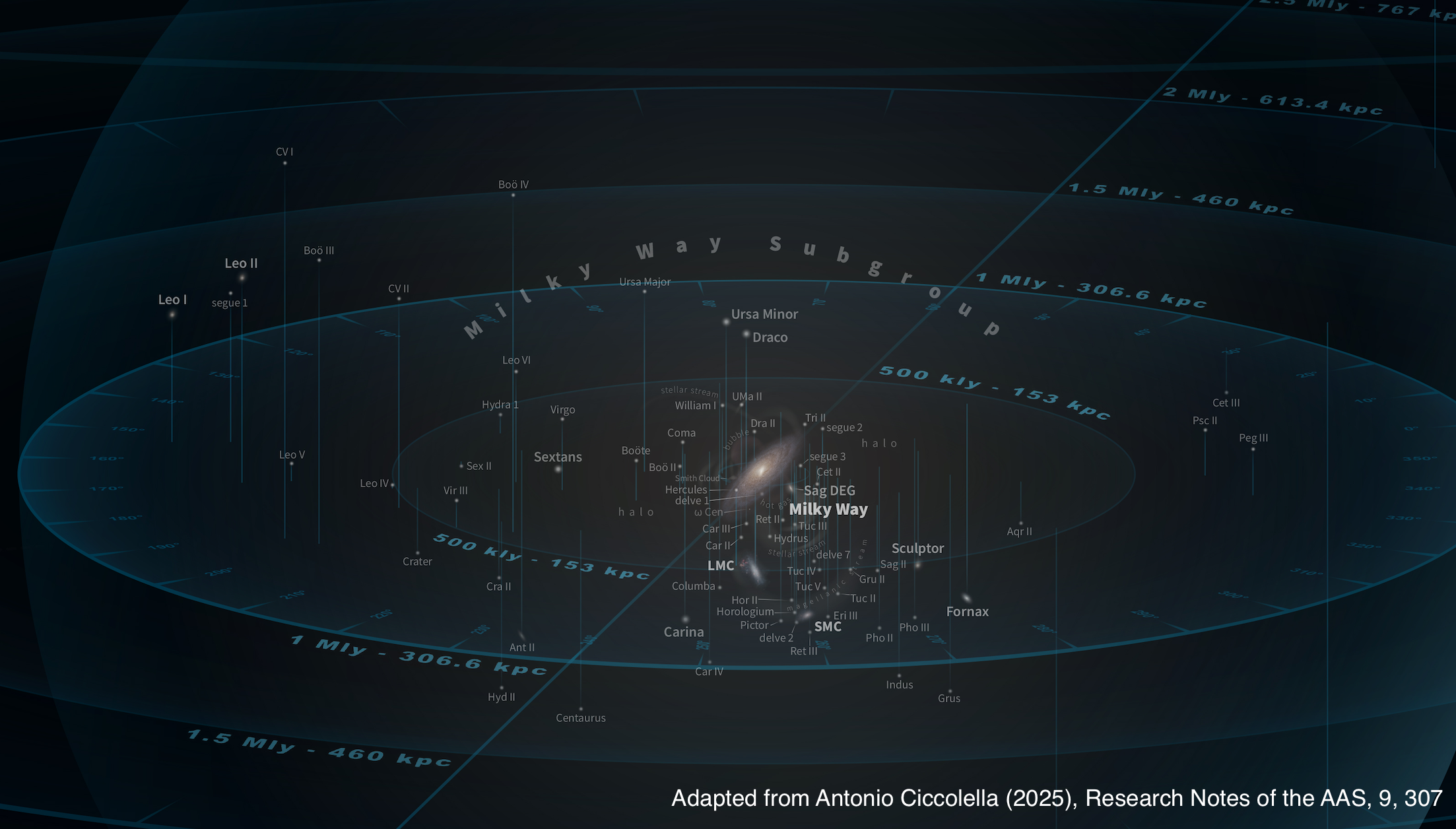
As the figure below illustrates, the Milky Way is rich in structure, surrounded by various satellite galaxies and stellar streams. My research focuses on discovering these systems and comparing their populations with predictions from cold dark matter and alternative dark matter models. Below are some of my completed projects and their accompanying papers. For a more comprehensive and up-to-date list of my publications, visit my ADS library.
DELVE Milky Way Census (ApJ 1000,46)
My research aims to test dark matter models by comparing their predictions with the observed population of Milky Way satellite galaxies. However, our current sample is incomplete with many faint and distant systems undiscovered. A systematic census with well-characterized detection limits allows us to account for these missing galaxies and make meaningful comparisons with simulations.
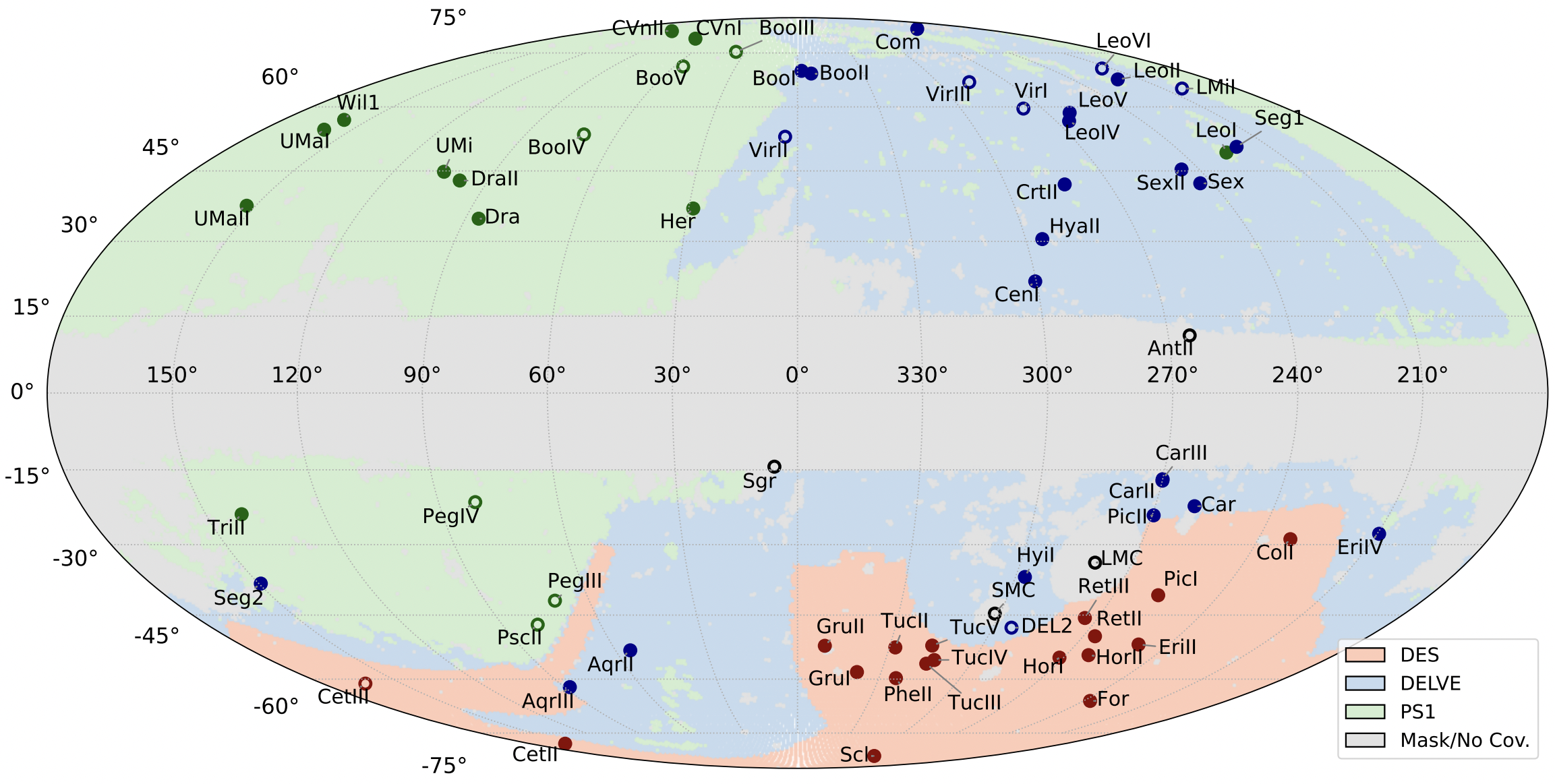
To solve this issue, I have been involved using the DECam Local Volume Exploration (DELVE) survey, which aims to Dark Energy Camera (DECam) to coverage of the southern high-galactic-latitude night to search for Milky Way dwarfs . Combining DELVE with Pan-STARRS data, I conducted the largest systematic Milky Way satellite census to date, covering up to 90% of the high-galactic-latitude sky, and recovered 49 Milky Way satellites.
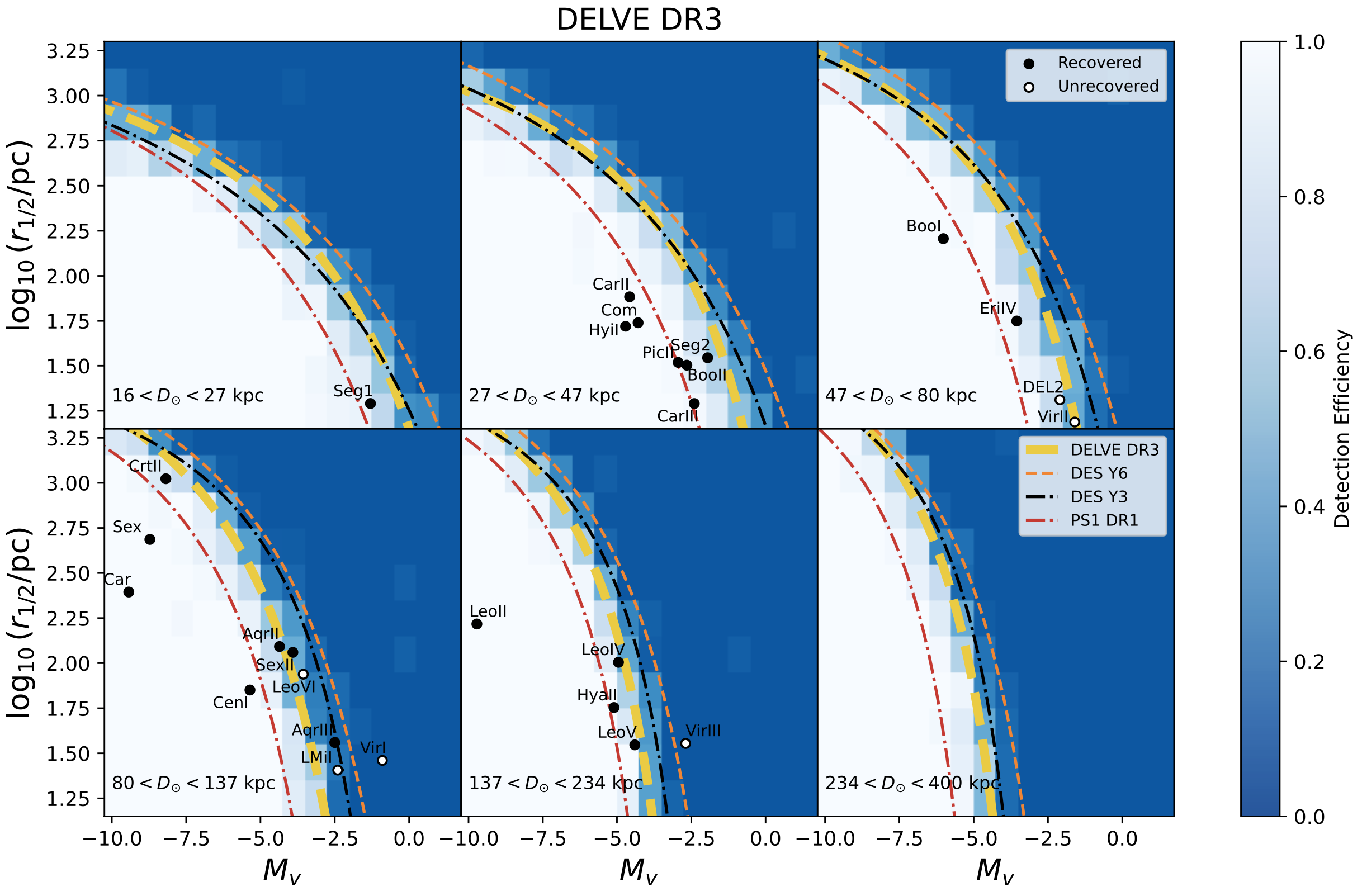
To quantify the census’s completeness, I tested how reliably the pipeline recovered simulated satellites injected into the survey data. Combining these detection probabilities with an empirical population model, I estimated a total of approximately 265 Milky Way satellites with MV ≤ 0 and inferred their completeness-corrected luminosity function and radial distribution.
Finding new galaxies with DELVE (ApJ 979, 176,ApJ 1000, 87)
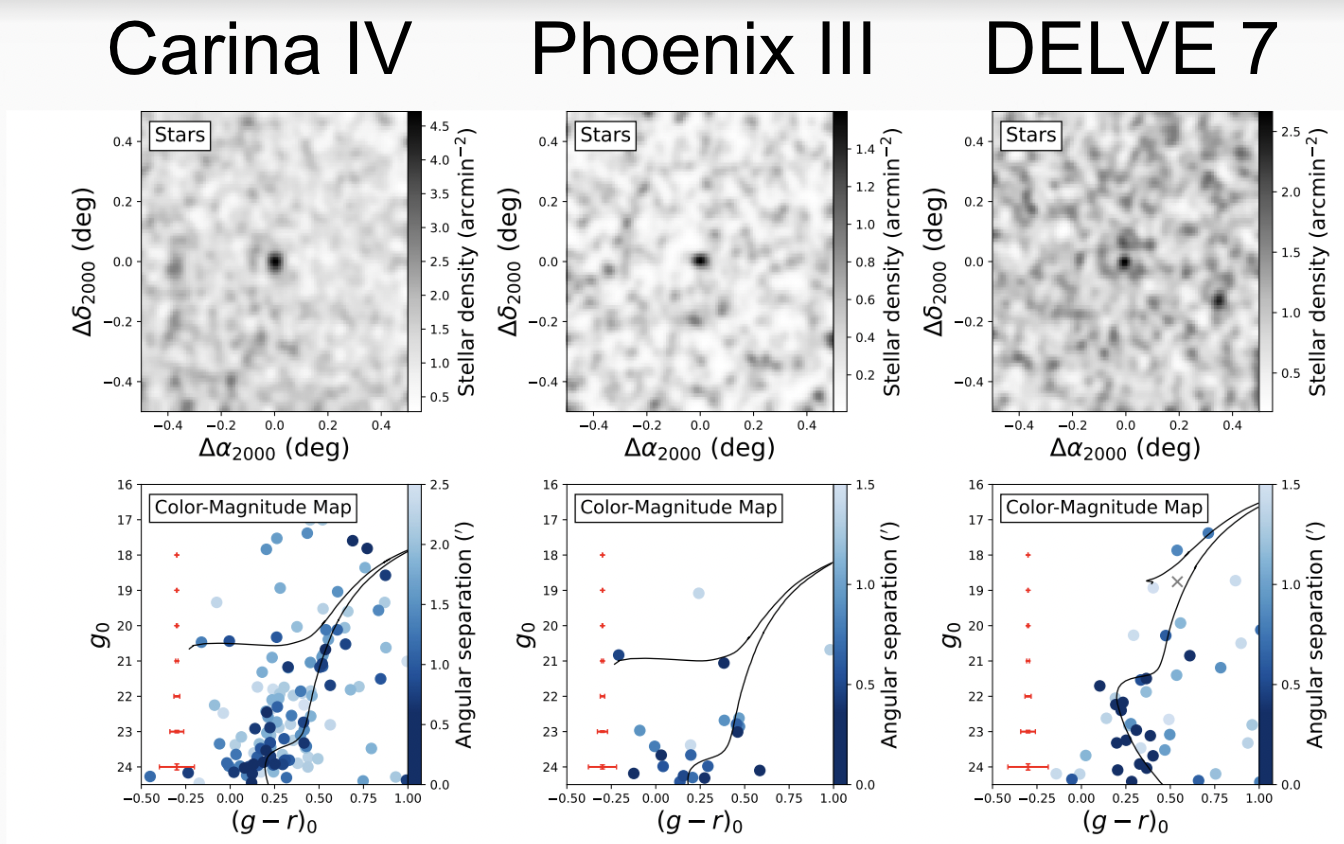
Beyond the census, I have led the discovery, follow-up observations, and publication of four new satellites in DELVE data: Leo VI, Carina IV, Phoenix III, and DELVE 7. For the brightest system, Leo VI, we obtained Keck/DEIMOS spectroscopy and confirmed its dwarf-galaxy nature through the large dispersions in its member stars’ velocities and metallicities. For the faintest system, DELVE 7, deeper Magellan/IMACS imaging confirmed it as the second-faintest known Milky Way satellite, with a stellar mass of approximately 60 M☉.
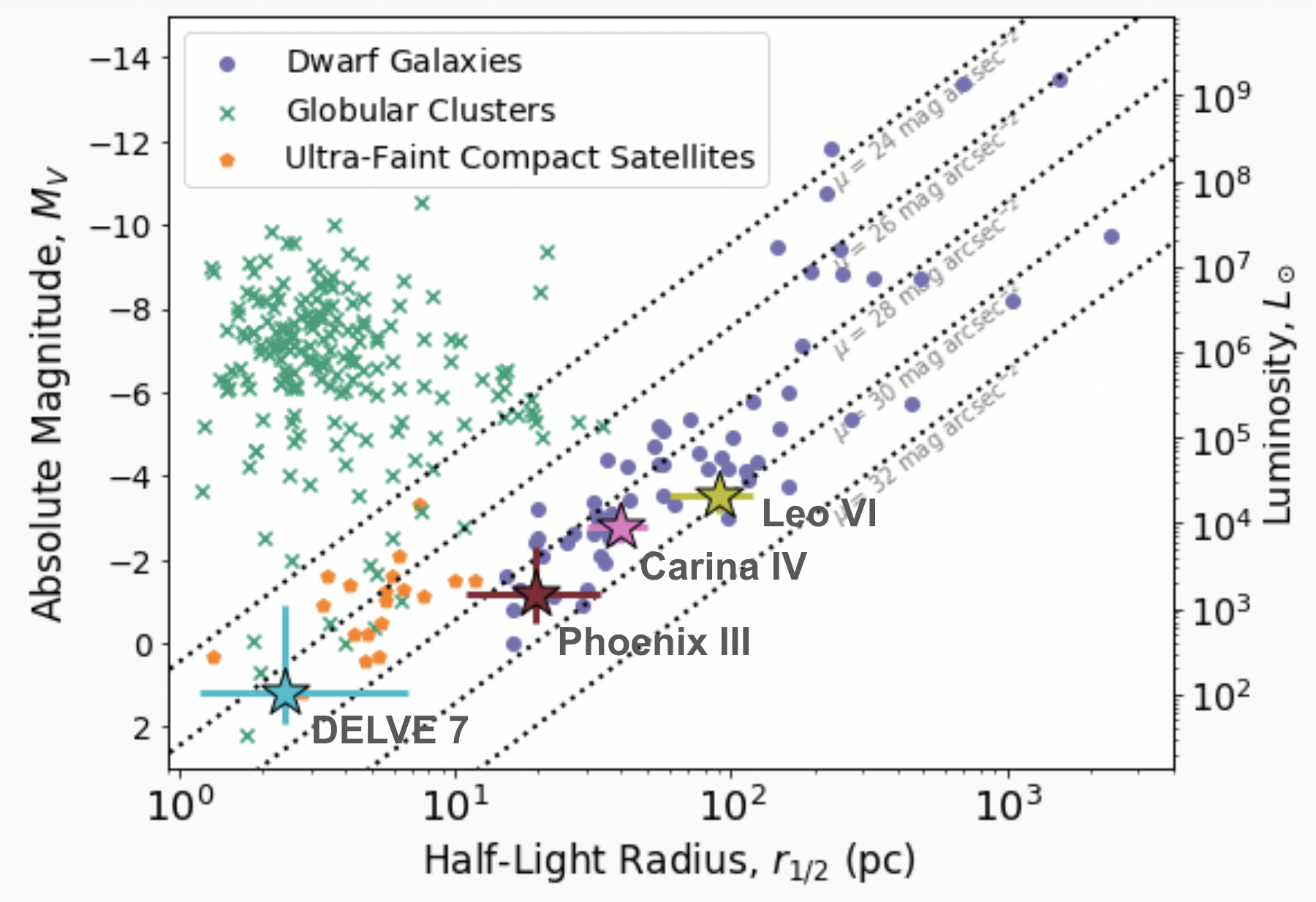
While Leo VI is confirmed to be a dark matter-dominated dwarf galaxy, the nature of the other three systems remains uncertain. As the size–magnitude diagram below shows, they could be either dwarf galaxies or star clusters, which can appear similar but lack substantial dark matter. Further follow-up observations are needed to distinguish between these possibilities.
Mixed Warm Dark Matter Constraints (PRD 111, 63079)
Using DES and Pan-STARRS1 data, I placed leading constraints on mixed warm–cold dark matter models. I used the extended Press–Schechter formalism to calculate how a warm dark matter component suppresses subhalo abundance, then incorporated this prediction into the subhalo–galaxy connection model of Nadler et al. (2020) to predict the Milky Way’s satellite population.
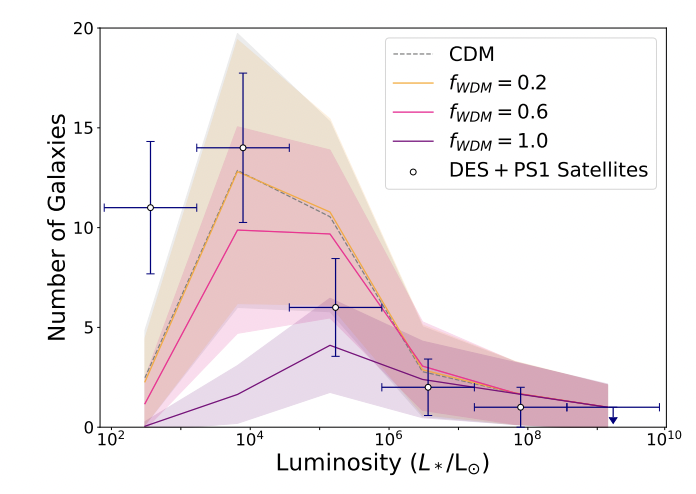
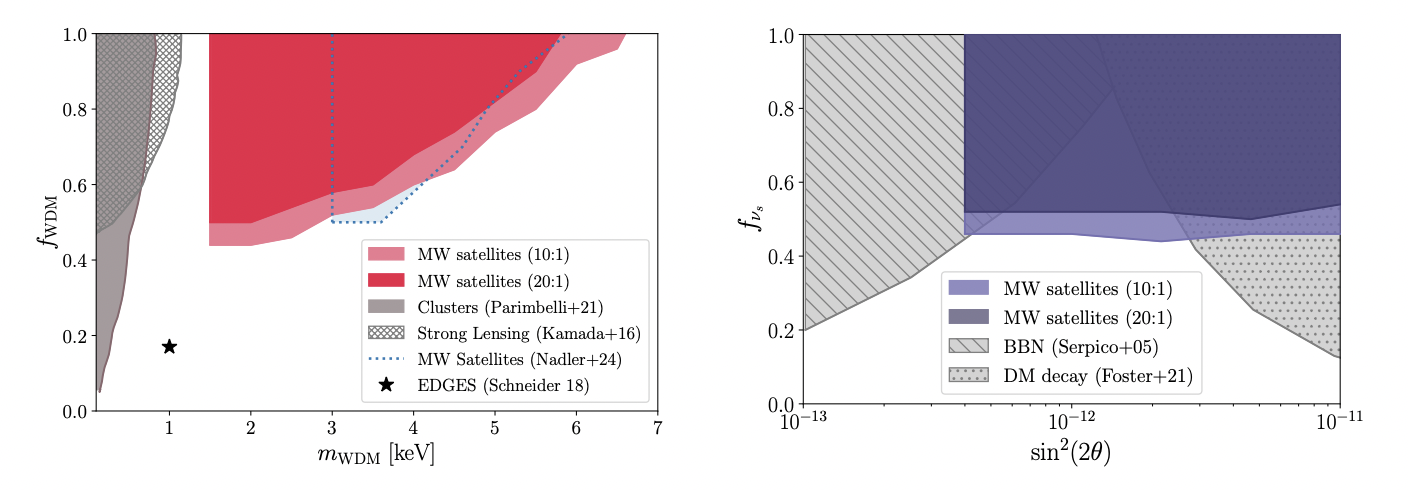
Comparing these predictions with observations, I ruled out purely thermal-relic warm dark matter with particle masses mWDM ≤ 6.6 keV. Lower-mass warm dark matter remains viable when mixed with a cold component, but its allowed fraction decreases as the particle mass falls. For mWDM ≲ 1.5 keV, this limit levels off at fWDM ≲ 0.45. I also derived analogous constraints on mixed sterile-neutrino models.
Modelling DINOS strong gravitational lenses (MNRAS 530, 1474)
Dark matter subhalos with masses below 106 M☉ are unlikely to host luminous galaxies. Strong gravitational lensing offers a promising way to detect these otherwise invisible structures through the subtle distortions they produce in lensed arcs. By modeling these lenses, we can map their mass distributions and search for low-mass subhalos. To support this effort, I have built an automated pipeline to model galaxy–galaxy lenses from the SLACS, SL2S, and BELLS surveys.
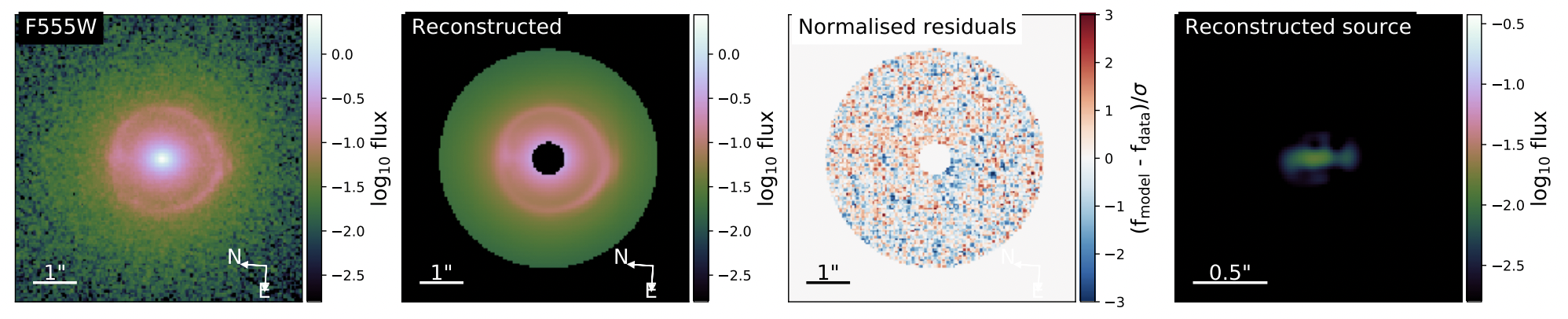
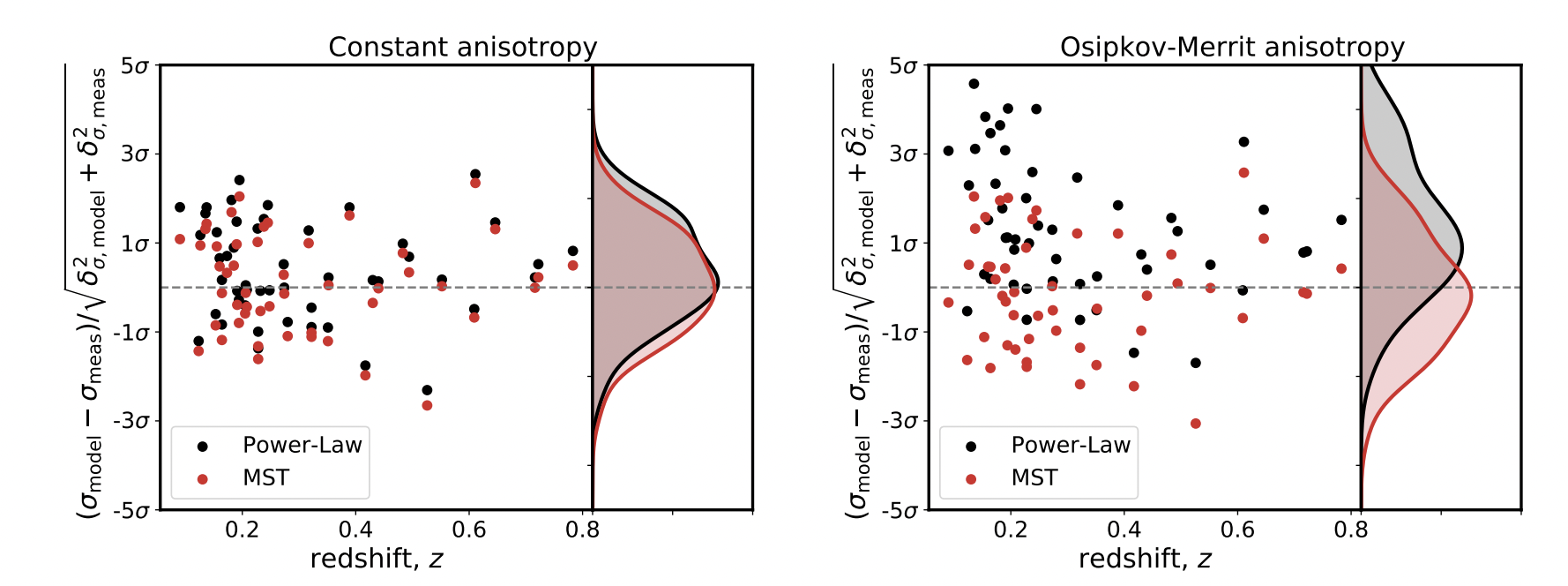
By combining lens models with stellar dynamics, we constrain the mass-sheet degeneracy in our models. Assuming spatially constant stellar anisotropy, we find that the mass profiles of SLACS lens galaxies are consistent with a power law within 1.1σ, while those of SL2S lens galaxies, at a mean redshift of 0.6, are consistent within 0.8σ.
DELVE Zooniverse Project
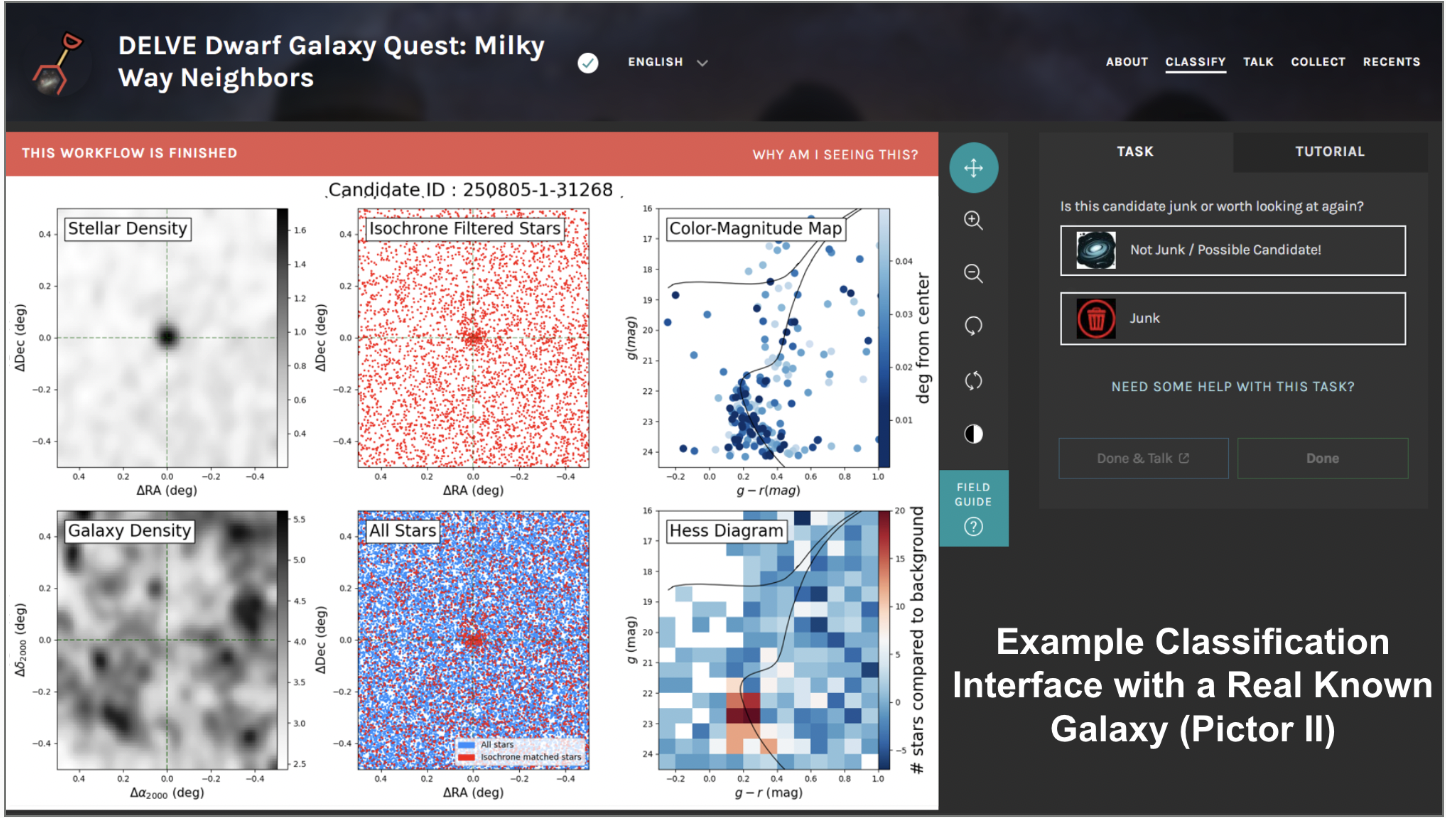
My search for faint galaxies in DELVE data produced tens of thousands of potential detections, some of which may be previously undiscovered galaxies. To identify the most promising candidates, I led the launch of DELVE Dwarf Galaxy Quest: Milky Way Neighbors on Zooniverse. Over 1,500 volunteers helped inspect more than 40,000 images, contributing over one million classifications to the search for new Milky Way neighbors.